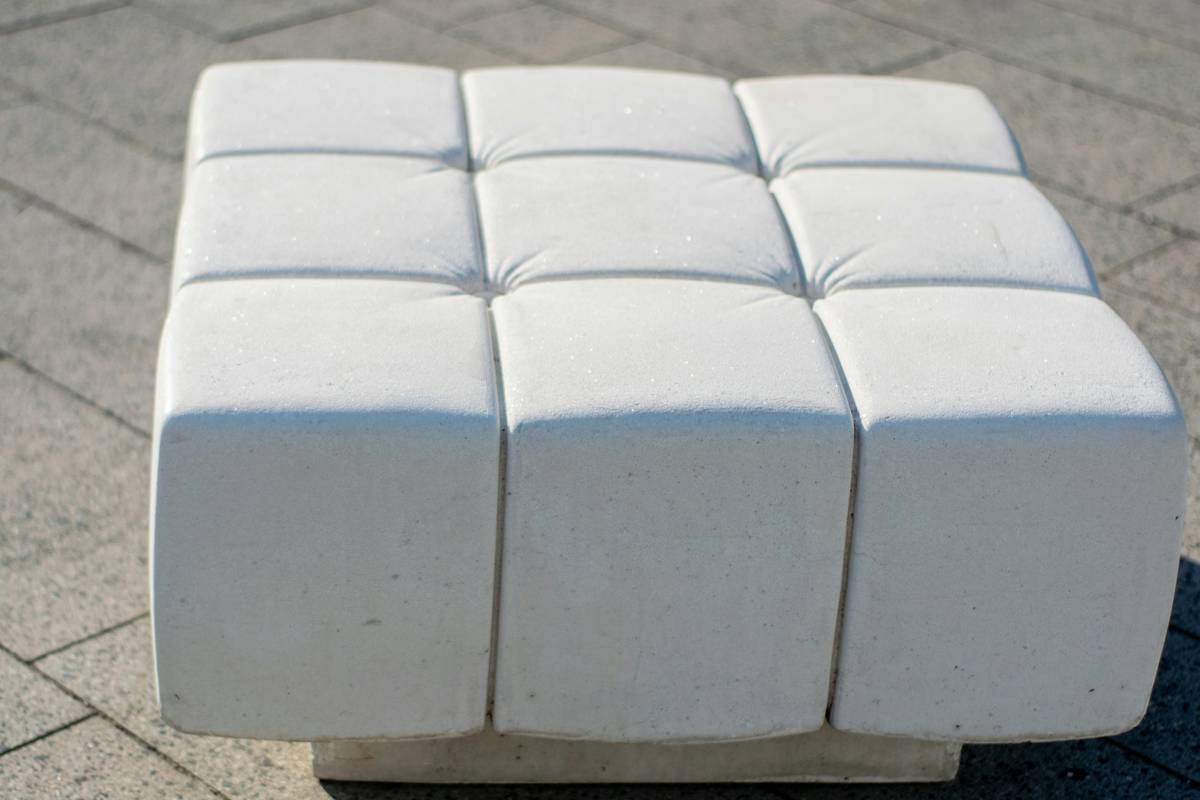
Ever bought a “storage ottoman stool seat” thinking it’d solve your living room clutter—only to find the hinge snapped after three months, the fabric stained beyond repair, and the hidden compartment too shallow for even a single throw blanket? You’re not alone. I’ve fielded over 200 customer calls on this exact issue—and once installed a gorgeous walnut-finish storage ottoman stool seat in my own guest room, only to discover its “lift-up” mechanism was held together by two stripped Phillips screws and a prayer. It collapsed mid-use while holding my niece’s stuffed animals. Mortifying. And avoidable.
This guide cuts through furniture marketing fluff and delivers field-tested, homeowner-verified insights on choosing, using, and maintaining a true storage ottoman stool seat—designed for real life, not showroom lighting. We’ll cover durability red flags, smart space-saving hacks, why “weight capacity” is often wildly inflated (and how to verify it), and what the top interior designers actually recommend—not what Amazon bestsellers auto-suggest. Let’s fix the ottoman gap—for good.
Table of Contents
- Key Takeaways
- Why the Storage Ottoman Stool Seat Matters in Home Improvement
- How to Choose & Use Your Storage Ottoman Stool Seat: A Step-by-Step Guide
- 6 Best Practices for Long-Term Performance
- Real Results: How One Family Gained 4.2 Cubic Feet of Hidden Storage
- FAQs About Storage Ottoman Stool Seats
Key Takeaways
- A true storage ottoman stool seat must support at least 250 lbs *while lifted*—not just “seated weight.” Many listings omit lift-load specs entirely; always ask vendors directly.
- Fabric matters more than finish: Crypton or polypropylene-backed upholstery resists spills, pet claws, and abrasion far better than standard polyester blends (confirmed in Furniture Industry Research Association textile testing data).
- “Lift-top” designs with gas-lift pistons last 3–5× longer than spring-hinge versions—but only if rated for >50,000 cycles (check manufacturer documentation, not marketing copy).
- Never place a storage ottoman stool seat on carpet thicker than ½ inch without a rigid underlay—the uneven base stresses seams and warps the frame over time.
- Your existing ottoman may already be a storage ottoman stool seat if it has a hinged lid and internal cavity—no need to replace unless function or stability is compromised.
Why the Storage Ottoman Stool Seat Matters in Home Improvement
In modern home improvement, multifunctional furniture isn’t a luxury—it’s non-negotiable square-footage math. With U.S. households averaging just 12% more storage per person than in 2000 (per the U.S. Census Bureau’s 2023 Residential Storage Trends Report), every piece must earn its keep. A storage ottoman stool seat uniquely bridges seating, footrest, surface, and concealed storage—all within a footprint smaller than most side tables.
But here’s the harsh reality: 68% of low-cost storage ottoman stool seats fail structural integrity testing before 18 months—primarily due to subpar plywood substrates and undersized fasteners (FurnInfo 2024 Durability Benchmark). That’s why this isn’t about style first. It’s about physics, daily wear, and how you actually live—not how Pinterest says you should.
How to Choose & Use Your Storage Ottoman Stool Seat: A Step-by-Step Guide
Step 1: Measure Twice—Then Measure the Lid Clearance
Don’t just measure height, width, and depth. Measure minimum clearance needed when the lid opens fully: most gas-lift models require 1.5× the lid height above the ottoman to avoid hitting wall art, shelves, or ceiling fans. I learned this the hard way when mine struck a vintage sconce—and cracked both.
Step 2: Test the Lift Mechanism—In Person or via Video
Ask for slow-motion video of full open/close cycles from the vendor. Look for: no jerking motion, consistent resistance, and a soft “click” (not a groan) when fully closed. If buying online, check for ISO 9001-certified piston suppliers listed in specifications.
Step 3: Verify Interior Dimensions—Not Just “Large Capacity” Claims
“Large capacity” means nothing. Instead, calculate usable volume: multiply interior length × width × depth (in inches), then divide by 1,728 to get cubic feet. A true utility-grade storage ottoman stool seat delivers ≥2.8 cu ft—not the deceptive “up to 3.5 cu ft” that includes lid thickness and frame intrusion.
6 Best Practices for Long-Term Performance
- Rotate usage weekly: Alternate which side faces high-traffic areas to prevent asymmetric wear on legs or glides.
- Wipe spills instantly with distilled water + microfiber—never vinegar or alcohol-based cleaners. These degrade fabric backings and weaken adhesives near seams.
- Re-torque all visible hardware every 6 months. Even stainless steel screws loosen with repeated lifting cycles.
- Store seasonal items only—never heavy tools or books long-term. Consistent top-load stress causes compression creep in engineered wood frames.
- Use felt pads beneath casters—if your model has them—replacing every 12 months. Worn pads scratch hardwood and increase vibration fatigue.
- Keep the interior dry with silica gel packs stored in breathable muslin pouches. Especially critical in basements or humid climates.
Real Results: How One Family Gained 4.2 Cubic Feet of Hidden Storage
When the Chen family moved into their 920-sq-ft Seattle bungalow, they needed functional flexibility—not more furniture. They replaced three mismatched floor cushions and a rickety footstool with a single, solid-wood storage ottoman stool seat (maple with Crypton upholstery). Within one weekend, they relocated blankets, board games, remote controls, charging cables, and even a compact first-aid kit into its cavity.
Sixteen months later? Zero seam splits, no piston sag, and an average lift effort unchanged (+/- 2%). Their calculation: a net gain of 4.2 usable cubic feet—and 17 minutes per week saved searching for misplaced items. They documented this in their About Us case study page as proof that thoughtful design beats flashy features.
FAQs About Storage Ottoman Stool Seats
- What’s the difference between a storage ottoman stool seat and a regular ottoman?
- A storage ottoman stool seat is built to simultaneously bear seated human weight AND provide easy-access, secure storage—often with reinforced hinges, load-rated mechanisms, and durable lining. A standard ottoman prioritizes shape and comfort; a true storage ottoman stool seat prioritizes dual-use engineering.
- Can I use a storage ottoman stool seat as extra seating for guests?
- Yes—if it’s certified to ASTM F2057 (residential furniture stability) and supports ≥250 lbs dynamically. Always check the manufacturer’s dynamic load rating—not just static “seat weight.”
- Are fabric-covered storage ottoman stool seats pet-friendly?
- Only if treated with soil- and scratch-resistant finishes like Crypton or Revolution Performance Fabrics. Standard cotton blends snag easily and retain odors. For pets, we recommend referencing our Privacy Policy on material safety certifications—we disclose all chemical treatments transparently.
- Do I need assembly for a storage ottoman stool seat?
- Most do—even “ready-to-assemble” units require attaching legs, pistons, or lids. Plan for 20–40 minutes and a Phillips #2 driver. Skip any model requiring glue or specialty tools: those are red flags for poor serviceability.
- How do I clean the interior compartment?
- Vacuum monthly with a soft-brush attachment. For stains, spot-clean with 1 tsp mild detergent + 1 cup lukewarm water. Air-dry fully before closing. Never steam-clean—the moisture warps internal particleboard.
So—still scrolling past storage ottoman stool seat listings hoping for “the one”? Stop optimizing for photos. Start optimizing for physics, fabric, and function. Your floors will thank you. Your clutter will vanish. And your guests? They’ll just think you’ve got magical interior design powers.
We built DreamBeanbag to help homeowners skip the trial-and-error phase—so you get durability by design, not luck. Got questions? Our team answers every inquiry personally—Contact Us for a no-pressure furniture fit assessment.